
What is the TMJ, in plain words?
TMJ stands for temporomandibular joint. It’s the hinge that connects your lower jaw to your skull, and you have one on each side, just in front of your ears. Put your fingertips there and open your mouth, and you’ll feel it move.
It’s one of the busiest joints in your body. It works every time you talk, chew, swallow, or yawn. A small disc sits inside the joint and acts as a cushion, and strong muscles in your cheeks and temples do the work of moving it. When the joint or those muscles are under strain, people often call it “having TMJ.” The more exact name is a TMJ disorder, or TMD.
Signs to watch for
- Clicking, popping, or grating when you open or close your mouth.
- Soreness in your jaw, face, or near your ears, especially first thing in the morning.
- Morning headaches, often felt at the temples.
- A jaw that feels tight or tired, or that is hard to open wide.
- Worn, flattened, chipped, or sensitive teeth, or crowns and fillings that keep breaking.
- A partner who hears you grinding at night.
Grinding and clenching: a common cause
Grinding or clenching your teeth is called bruxism. It often happens while you sleep, so many people don’t know they do it until a partner hears it, or until we spot the wear on their teeth.
Clenching and grinding put far more force on your teeth and jaw than normal chewing, and they can go on for hours. Over time that can wear down enamel, overwork your jaw muscles, strain the joint, and crack teeth or dental work. Stress, sleep problems, and the way your teeth fit together can all play a part.
What a TMJ assessment looks like
- We listen first. We ask where it hurts, when it’s worst, and what you’ve noticed, like clicking, headaches, or grinding. There’s no rush.
- A gentle exam. We check how your jaw opens and moves, feel the joints and muscles, and look at your bite and for signs of wear on your teeth.
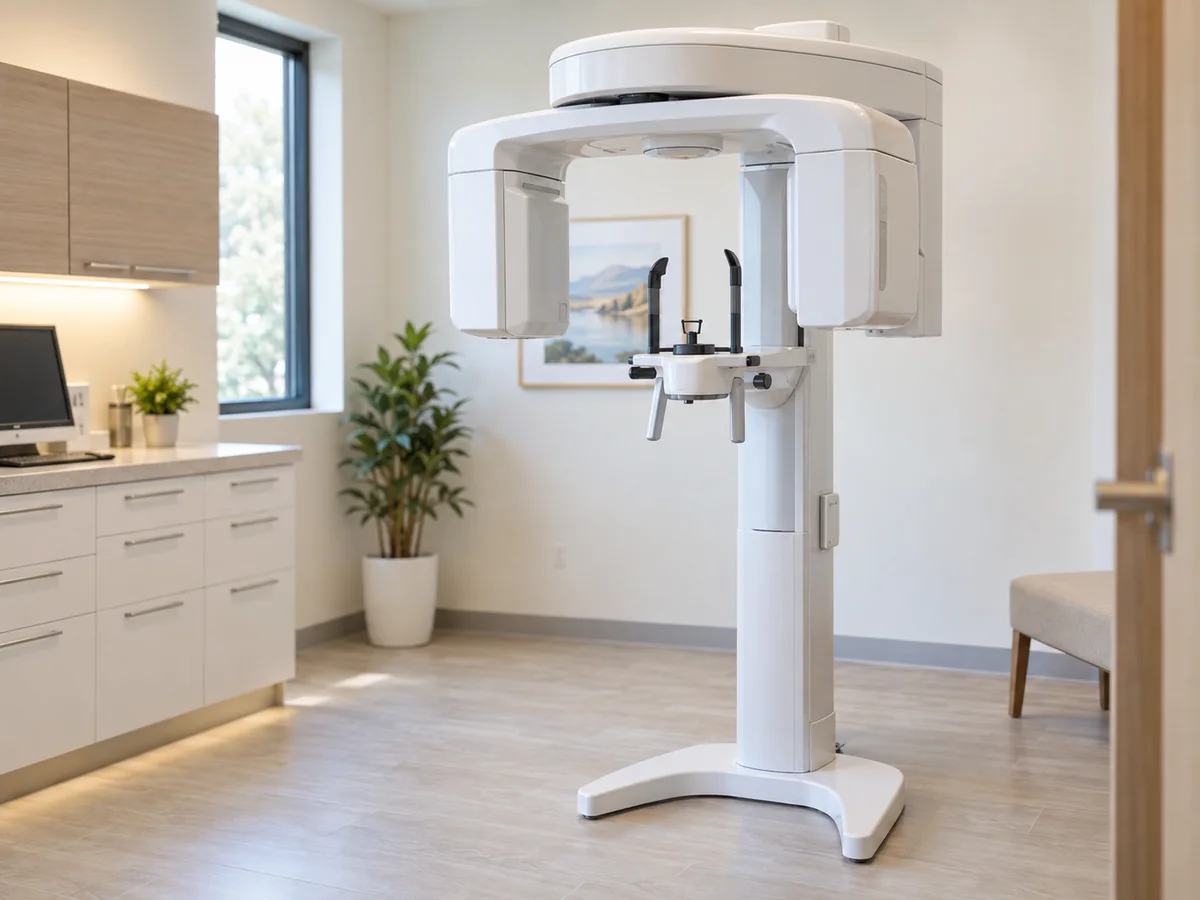
- Images, if they’ll help. A digital panoramic X-ray shows your jaw joints and bone in one quick, low-dose scan.
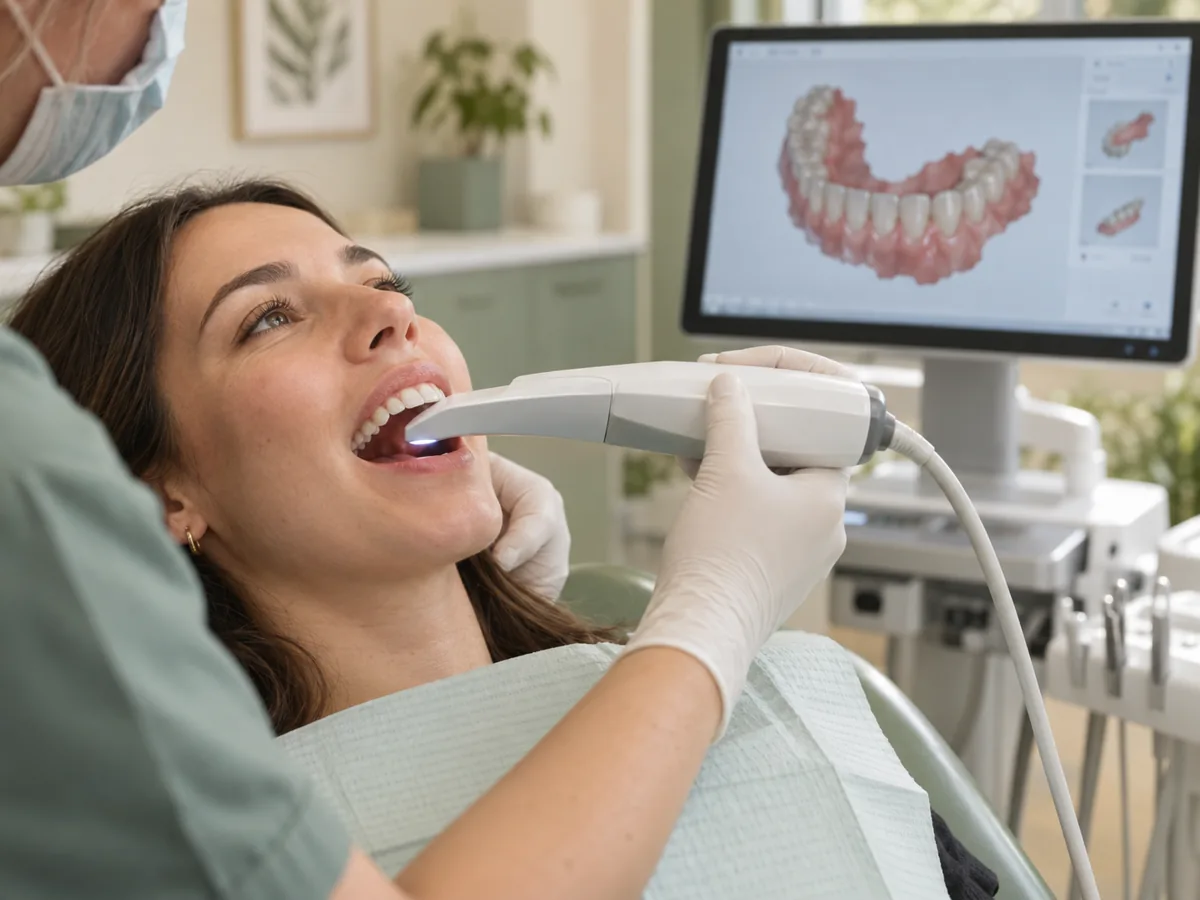
- A plan that fits you. We explain what we found and talk through your options. If a night guard makes sense, we take a quick TRIOS digital scan to make it. No goopy trays.
How a night guard helps
A night guard is a custom-fitted appliance you wear over your teeth while you sleep. It’s one of the simplest ways to protect your teeth and jaw from grinding and clenching.
Protects your enamel
The guard sits between your upper and lower teeth, so they can’t grind against each other and wear down over time.
Eases jaw strain
By cushioning the pressure of clenching, a guard helps reduce the strain on your jaw joints and muscles.
Protects dental work
Crowns, bridges, and veneers are an investment. A guard helps keep them from cracking under nighttime grinding.
Fewer morning headaches
Less tension in your jaw and face muscles often means fewer tension headaches when you wake up.
Why a custom guard, and why KeySplint Hard
Store-bought guards are made to fit everyone, so they rarely fit anyone well. They can feel bulky, shift during the night, and get in the way of comfortable sleep. We design each guard from a precise TRIOS digital scan of your teeth, so it fits closely and comfortably and doesn’t interfere with your breathing or sleep.
Most traditional night guards are made of acrylic. Acrylic can contain small amounts of leftover, unreacted ingredients from manufacturing, called residual monomers, which may slowly come out into the mouth over time. Instead, we use KeySplint Hard, a highly cross-linked resin that cures into a dense, stable material. It’s strong, durable, and fits with our gentle, health-conscious approach to care.
Small habits that can help
- Lips together, teeth apart. At rest, your teeth shouldn’t touch. Check in with your jaw a few times a day and let it relax.
- Give your jaw a break during flare-ups: choose softer foods, cut food into smaller bites, and skip gum and very chewy foods.
- Try gentle warmth, like a warm cloth on sore jaw muscles for a few minutes.
- Notice your stress. Many people clench more during busy or stressful times, often without realizing it.
Good to know
- A night guard protects your teeth and eases strain, but jaw pain can have more than one cause. If you need care beyond what we offer, such as physiotherapy or a visit to your doctor, we’ll tell you and help you find it.
- Loud snoring, gasping at night, or waking up tired can be signs of a sleep-related breathing problem. These can go together with grinding, so let us know. We also offer sleep apnea assessments.
- If your jaw locks open or closed, or you have swelling or pain that’s getting worse, call us right away at (613) 829-6545.
- Play sports? We also make custom sport guards. See our TMJ and night guard page for more on night guards and sport guards.
Is your jaw trying to tell you something?
Book a TMJ assessment and we’ll take a gentle look at your jaw, teeth, and bite, explain what we find, and talk through whether a custom night guard is right for you.